PHARMACISTS
Chinedu Akpa
Chinedu Akpa is a community pharmacist providing expert advice and care to patients. He has previously worked in a hospital pharmacy, where he gained requisite clinical experience. He enjoys being a freelance medical writer. His desire for writing in the medical field started during the COVID-19 pandemic due to the misinformation spreading during that period. He writes medical articles weekly which he publishes on his Medium page as his contribution to keeping the general public well informed.
Articles
Dr Gerry Hughes

Dr Gerry Hughes is an experienced clinical pharmacist, researcher, and medical writer with a passion for translating complex scientific concepts into accessible content. Gerry has a keen interest in advances in therapeutic technologies, management of infectious disease, healthcare behaviour change and medication safety. With a dedication to advancing healthcare communication, Gerry continues to shape narratives that bridge the gap between research and understanding.
Articles
A pharmacist world around cancer patients
Chinedu Akpa
Keywords: seven-star pharmacist, medication dispensing, education, support
Introduction
Cancer cells are like stubborn little children who do not listen to their parents' instructions on how to behave. Their unruliness can put a dent on the image of the family. When cells refuse to listen to genetic instructions on how they should divide and die, this can put a big dent on the overall health of the body by causing life-threatening tumours and mutant cells to develop and spread.
Most cells have a lifespan; some die through a process called apoptosis, but cancer cells are recalcitrant to this process; they are akin to those little stubborn children. These cells are not interested in working in synergy with other cells and tissues for the overall well-being of the body; instead, they divide uncontrollably, infecting tissues around them and beyond in a process known as metastasis.
Cancer can be defined as the unregulated proliferation of formerly healthy cells as a result of mutations. These cancer cells, for some reason, don't respond to genetic instructions; they go rogue and start acting independently, thereby causing damage to several organs and tissues of the body.
The most common cancers are breast, lung, colon, rectum, and prostate cancers.
Statistics
According to the World Health Organisation (WHO), in 2020, cancer resulted in the deaths of nearly 10 million people worldwide. WHO also records that every year, about 400,000 children die of cancer worldwide.
The American Cancer Society (ACS) records that a little over 1.9 million cases of cancer are expected to be reported in 2023 in the US; of these 1.9 million cases, 609,820 are expected to die, making it 1,670 deaths per day.
Cancer can affect anyone, but one becomes more susceptible at age 50.
Cancer is one of the deadliest diseases in the world; in the US, only heart disease takes the front seat ahead of cancer in terms of mortality; according to the Centres for Disease Control, 695,000 people died of heart disease in 2021 in the US, and according to the ACS, 608,570 people died in the same year of cancer.
The journey
The journey of a pharmacist with a cancer patient begins in the laboratory and to the hospital.
It is a rollercoaster journey that weaves both professionalism and emotions along its path because of the peculiarity of cancer patients.
Their relationship with cancer patients begins even before they get to meet.
Pharmacists are involved in extensive laboratory experiments, clinical trials, drug discovery, and formulation. Their relationship with patients at this stage is likened to that of lovers in a long-distance relationship with the hopes of someday meeting to finally tell each other how much they have missed each other. For pharmacists, this opportunity doesn't arise until they get to the clinical aspects of their job, where they finally get to meet their "lovers" in the hospital.
The concept of the "Seven-Star Pharmacist" was introduced by WHO and covers these roles: carer, decision-maker, communicator, manager, teacher, leader, and lifelong learner. Some of these roles will come in handy as pharmacists discharge their duties and relate to their cancer patients.
One of the qualities that a pharmacist must have towards cancer patients is empathy, the reason being that so many of them come into the hospital with the notion that cancer of any type is a death sentence, regardless of whether it was detected early or not.
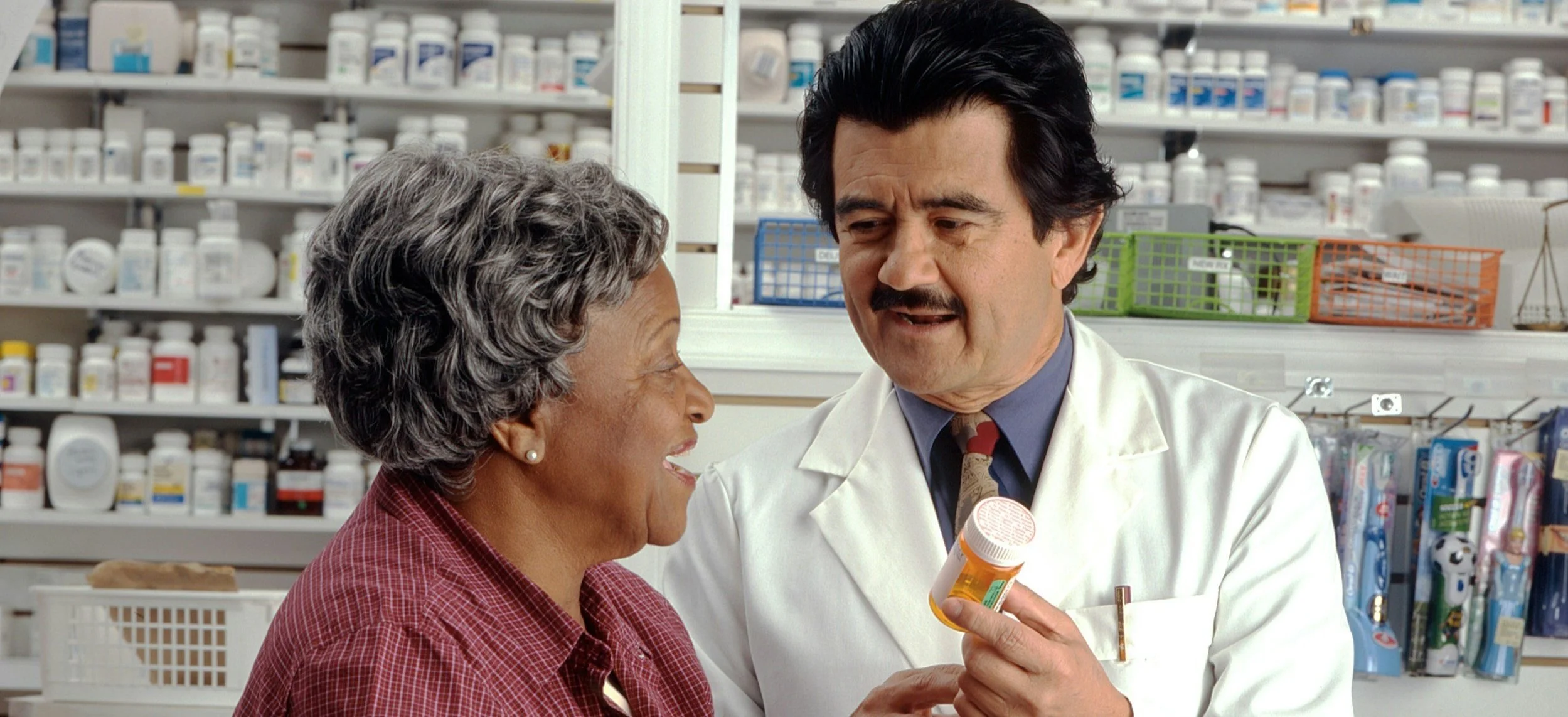
Our relationship or interaction with cancer patients cuts across medication dispensing, side effect management, patient counselling, specialised compounding, and follow-up support.
MEDICATION DISPENSING: One of the major jobs of a pharmacist is dispensing medication. But with cancer patients, pharmacists are usually not in a hurry, especially for first-timers. This is because of the nature of their medications. For instance, when dispensing a medication like methotrexate, one would have to confirm with the patient or physician the indication for the drug because doses may differ based on the disease state, patient risk category, concurrent drug use, phase of treatment, and response to treatment. While dispensing, pharmacists also need to remind the patient of how the drug should be taken, which includes its frequency and duration. This is so because some cancer medications are taken every 3 weeks; an example is paclitaxel. This is to avoid overdosing, knowing fully well that most anticancer drugs have a narrow therapeutic window. This is aside from other basic dispensing duties like labelling.
SIDE EFFECTS MANAGEMENT: One of the reasons some patients abscond from initiating their chemotherapy is the attendant side effects of the medications; giving medications for free is usually not enough incentive to keep this set of patients. Their fears, most of the time, are usually valid. Some complain that they are usually surprised that they feel more sick when they start taking the medication—an irony, right? Well, chemotherapy drugs are in a league of theirs when it comes to how they affect therapy. That's why patient education is key to the management of cancer patients. This comes with a lot of emotional intelligence. Hair loss, immune suppression, which could give rise to other illnesses, and myelosuppression are some side effects that patients have to battle with. These side effects must be adequately communicated to the patients, and strategies for their mitigation or reduction must be communicated as well, as this might help the patients with adherence.
PATIENT COUNSELING: Severe pain is one of the complications of cancer. It is usually managed with opioids like morphine. Patients are usually advised on the potential for addiction and tolerance of this particular medication. Patients are also counselled on the kind of food to eat and avoid. For example, cancer patients should avoid folic acid, which can exacerbate their problems. Sometimes, the relatives of these patients or guardians (when dealing with paediatrics) are the ones who are handed this counselling; some of them are just as integral to the treatment plan as the patients themselves. Sometimes we have to explain to patients why their drugs are dosed the way they are, especially when the needed results are not being felt. However, sometimes patients feel that they can change the dosage of their medication from once every three weeks to a daily dose when they feel it is not working. Patients are also counselled to take plenty of water since dehydration is a common side effect of most anticancer medications.
SPECIALISED COMPOUNDING: Some medications are usually reconstituted to suit the purpose for which they are meant. These are done for both paediatric and adult patients, as this makes it easier for dosing. Specific instructions are usually passed to parents, relatives, or guardians to shake the bottle where the medication was reconstituted before administering; this is to forestall overdosing.
FOLLOW-UP SUPPORT: An adherence plan is initiated; introduction to a support group; phone calls; and monitoring of side effects are all part of the support plan.
All of these are necessary because of how difficult it could be for patients to take their anticancer medication, no thanks to their debilitating effects.
Care must be taken by both the pharmacist, patient, and caregiver because of the cytotoxic nature of anticancer drugs. It is advised that healthcare professionals involved with them carry out random tests on themselves to be sure that they're fine.
Having cancer is not a death sentence, as advancements in drug research and new methods for early detection can improve survival rates.
The promise and pitfalls of CAR-T therapy in haematology and oncology
Dr Gerry Hughes
Keywords: immune system, solid malignacies, antigen expression pattern
Introduction
CAR-T is a new type of cancer treatment that uses the body’s own immunity to target cancer. It has demonstrated remarkable success for patients who have not responded to other treatments. The therapy involves extracting T-cells from the patient’s blood and genetically modifying them in a lab to produce chimeric antigen receptors (CARs). These CAR-T cells can then recognize and attach to specific proteins on the surface of cancer cells. Once the CAR-T cells are infused back into the patient, they multiply, attack and kill cancer cells. While CAR-T is very successful at treating blood (haematological) cancers, this has not translated to the treatment of solid (oncological) tumours. Here, we will discuss the challenges facing CAR-T therapy in oncology.
The Challenges to CAR-T Therapy in Oncology
One of the major challenges facing CAR-T for oncology indications is the lack of reliable tumour-associated antigens (TAAs) that can be targeted by CAR-T cells. Solid tumours also have a highly variable TAA pattern that further complicates successful CAR-T targeting. This variability can lead to ‘antigen escape’, where some cancer cells do not express the targeted antigen and can evade CAR-T cell recognition.
Unlike blood cancers, solid tumours have a complex microenvironment. The hostile tumour environment impedes CAR-T therapy in several other ways. For example, entry of CAR-T cells to a tumour can be effectively blocked by fibrous tumour complexes and inhibitory chemokines. The tumour microenvironment is also rich in immunosuppressive cells, such as regulatory T-cells and myeloid-derived suppressor cells, that inhibit the function of CAR-T. Solid tumours also have a ‘hypoxic core’ which creates an acidic environment, further inhibiting the function of CAR-T cells. These multiple barriers to successful CAR-T therapy are sometimes known as ‘cell trafficking’ barriers where CAR-T cells cannot easily access their site of action. This is not a problem in blood cancers as circulating CAR-T cells can act soon after infusion.
The so called ‘on target, off tumour’ effect can also limit CAR-T success and safety. In this case, the target antigen on cancer cells is also present on healthy cells which makes CAR-T less specific and potentially more toxic for the patient. Cytokine release syndrome is a well-recognised CAR-T side effect, where the CAR-T cells initiate an immune-mediated inflammatory response in the patient which requires supportive care.
Potential Solutions
Despite these challenges, research continues to focus on improving the efficacy of CAR-T therapy in solid tumours. One approach is to develop multi-valent CAR-T cells that can target several antigens simultaneously. Another approach is to engineer CAR-T cells to express cytokines that can recruit other immune cells to the tumour microenvironment.
Conclusion
CAR-T therapy is a promising immunotherapy that has shown remarkable success in treating haematological malignancies. However, its application in solid tumours has been limited by several challenges. The lack of reliable TAAs, immunosuppressive tumour environment, and heterogeneous antigen expression pattern are some of the major challenges facing CAR-T therapy in oncology. As this situation evolves, it is likely that CAR-T will need to be paired with other treatments to maximise its effectiveness and safety in treating oncological disease.