Dentists
Dr. Satabdi Saha is a paediatric dentist with a strong dedication to spreading awareness on oral health. Her focus is on communicating science and medical jargon to people. She believes in the power of ‘the right information at the right time.’ She is an accomplished scientific writer, having authored more than ten scientific publications in dentistry across various reputable journals. With a rich background spanning 12 years in healthcare, Dr. Saha has been recognised for delivering outstanding paper presentations in her field of expertise.
Dr Satabdi Saha
Articles
Swab and save: how saliva tests are transforming oral cancer diagnosis
Satabdi Saha
Keywords: oral cancer, oral squamous cell carcinoma, salivary proteomics, non-invasive
Oral cancer is among the 10 most common cancers around the world, with oral squamous cell carcinoma (OSCC) being the most prevalent one. Current diagnostics have extended well beyond conventional biopsy procedures, and state-of-the-art saliva tests are now emerging as the new standard in oral cancer diagnosis.
Despite the immense potential of these tests to detect oral cancer early, people lack awareness about them. Bridging this gap is crucial for detecting and managing oral cancers on time. And that's exactly what medical writers can help with. As more people understand the need to make informed choices about their health, the medical communications space is now booming with new opportunities to tackle communication needs.
In this article, we discuss saliva tests, salivary biomarkers, and how medical writers can help raise awareness levels among patients and transform this space.
What are salivaomics and saliva biomarkers?
Let's understand the basics behind these tests.
Salivaomics stands for the advanced use of salivary biomarkers for various clinical purposes. Salivary diagnostics is the science of detecting oral cancers based on these salivary biomarkers.
Biomarkers or biological markers are specifics that capture what is going on inside of a cell or molecule. For example, your body temperature is a biomarker. Just like a high temperature dictates the presence of an infection or inflammation in the body -similarly, changes in salivary biomarkers act as early warning signs for cancerous changes. These biomarkers can be DNA, RNA, or proteins. It also has enzymes, hormones, antibodies, and cytokines. Many of these come to saliva via blood.
Now that we know about the salivary biomarkers it's time to dig into what's special about them.
Why are saliva biomarkers unique?
Oral cancer, in its initial stages, can go without symptoms. Many people will only report prominent symptoms when the disease has progressed. This lowers the survival chances significantly. Routine saliva tests can help overcome this dilemma. Here is what makes them stand out:
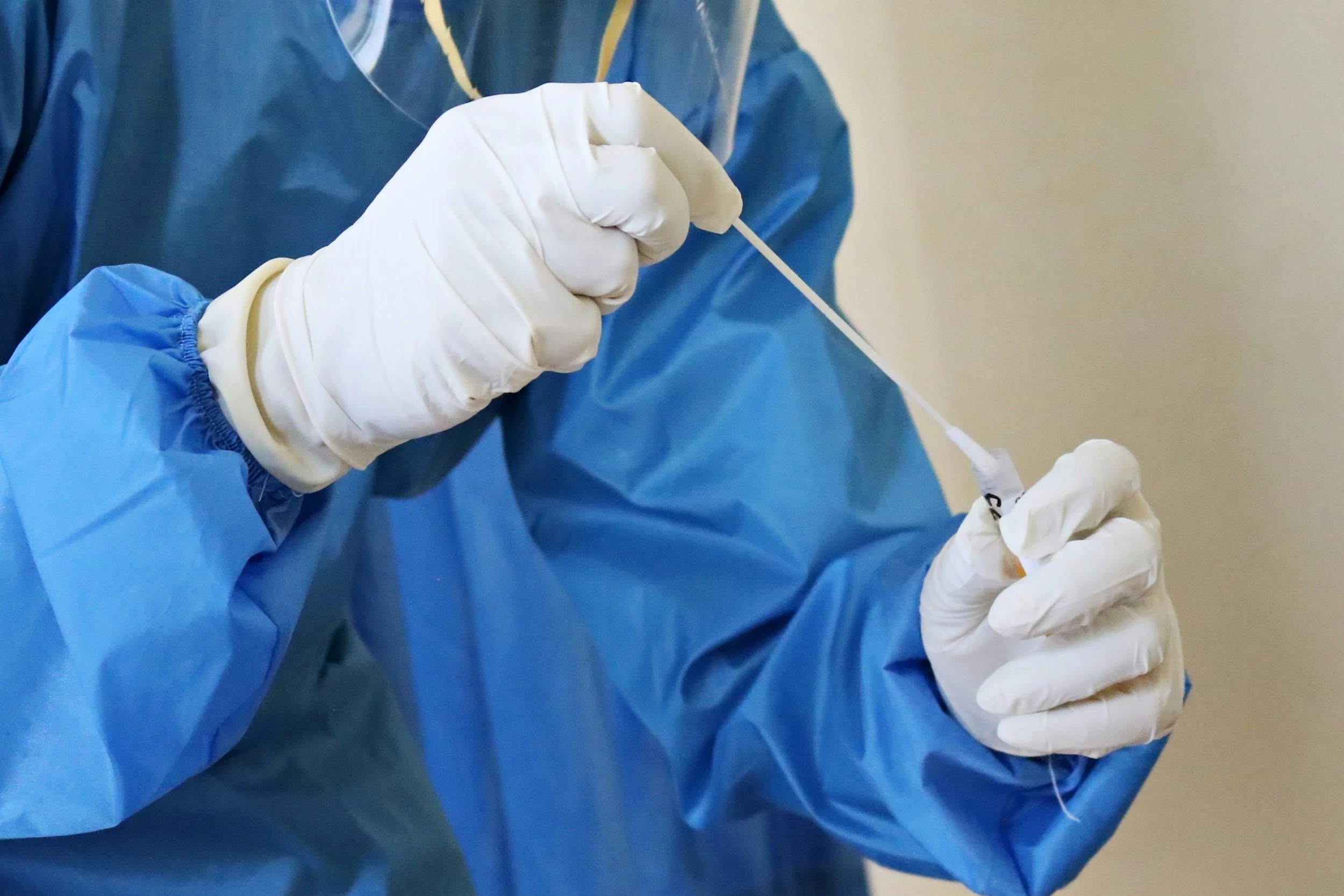
Saliva tests are non-invasive. Unlike blood tests and tissue biopsies, saliva can be collected directly from the mouth. Many dental operatories are incorporating routine saliva tests to get a clear picture of what's going on inside.
A major limitation of oral cancer therapy is late diagnosis. Saliva biomarkers help detect oral cancers early, thus avoiding irreversible complications at advanced stages. This early diagnosis can help improve the disease prognosis and save lives.
They are easy to perform. Unlike blood tests and biopsies that need a set of tools and trained hands, saliva tests are easy to do and need no specific setup. They are simple to collect and can be a key tool for mass screening of oral cancers.
They have high diagnostic efficacy owing to their proximity to oral cancer cells. Studies highlight that saliva tests are good at detecting oral cancers.
This brings us to the next section- what are the key salivary biomarkers?
Key saliva biomarkers and their significance in oral cancer screening and follow-up.
Cancers develop with genetic changes in the DNA. Interestingly, these changes are detected in the saliva biomarkers, and provide the possibility of personalized cancer therapy based on a real-time picture of the tumor, node, and metastasis staging system (TNM). Among over 100 biomarkers present in saliva, here are the most studied ones- and what they mean.
● Circulating Tumor DNA (ctDNA): These are fragments of DNA shed by cancer cells. Detecting ctDNA in saliva can indicate oral cancer. Also provides information about its genetic makeup.
● MicroRNAs (miRNAs): These are small RNA molecules that regulate gene expression. Abnormal levels of specific miRNAs in saliva can serve as indicators of oral cancer, its stages, and how fast it can progress.
● Salivary Proteomics: Studying all the proteins in saliva can reveal specific changes or patterns linked to oral cancer development.
● Exosomes: Tiny structures containing genetic material and proteins released by cancer cells. Their presence in saliva can signal the progression of the disease.
Role of medical writers in spreading awareness on saliva diagnostics: How healthcare professionals can help
The first step to fight oral cancer is awareness. While healthcare professionals work relentlessly to improve oral cancer outcomes, today medical writers play a crucial role in educating people on new techniques and medical discoveries.
Scientific language is technical. And more than 40% of UK adults are unable to understand the medical jargon. Medical writers translate complex medical data and study results into simple language and plain summaries that we can grasp easily. With the right information, more people are ready to try out these saliva tests as an alternative to conventional diagnostics.
With each passing day, more people are seeking out data from credible sources to help them make informed decisions. To keep up with this rising need, we need more medical writers from the healthcare profession to advocate such novel technologies, and raise health literacy levels.
Key Takeaways
● Saliva tests and saliva biomarkers are a breakthrough diagnostic in detecting and monitoring oral cancers.
● These tests are easy to perform, accessible, non-invasive, and high in efficacy.
● Currently, there is a lack of awareness on what saliva tests are, and how they work.
● Medical writers can help bridge this gap by translating medical study data into simple language, raising health literacy rates, and improving outcomes.
Concluding lines
Saliva tests are opening up new horizons in oral cancer therapy. A growing body of research confirms the efficacy of these tests. Creating awareness of this is crucial to improve patient literacy and how they look at oral cancer therapy. Medical writers, with their unique ability to transform medical research jargon into easy-to-understand writeups, are best suited to create a huge impact on where we are headed with salivary diagnostics in oral cancer therapeutics.
Primary resources:
● Cristaldi, M., Mauceri, R., Di Fede, O., Giuliana, G., Campisi, G., & Panzarella, V. (2019). Salivary Biomarkers for Oral Squamous Cell Carcinoma Diagnosis and Follow-Up: Current Status and Perspectives. Frontiers in Physiology, 10, 500166. https://doi.org/10.3389/fphys.2019.01476
● Sirisha Chundru, V. N., Nirmal, R. M., Srikanth, B., Bojji, M., Midhun, N., & Lakshmi, B. J. (2021). Salivaomics for Oral Cancer Detection: An Insight. Journal of Pharmacy & Bioallied Sciences, 13(Suppl 1), S52. https://doi.org/10.4103/jpbs.JPBS_529_20
● Mumtaz, M., Bijnsdorp, I.V., Böttger, F. et al. Secreted protein markers in oral squamous cell carcinoma (OSCC). Clin Proteom 19, 4 (2022). https://doi.org/10.1186/s12014-022-09341-5
● Khurshid, Z., Zafar, M. S., Khan, R. S., Najeeb, S., Slowey, P. D., & Rehman, I. U. (2017). Role of Salivary Biomarkers in Oral Cancer Detection. Advances in Clinical Chemistry, 86, 23-70. https://doi.org/10.1016/bs.acc.2018.05.002